Fossicker is free. If it helps you, you can chip in once through Stripe to help cover running costs and give me time to keep building it.
01 · The work
Not factory-made. Not pulled from a shelf.
I make for the person, the purpose and the material in front of me. Some pieces begin with a sound. Some begin with a stone. The best ones become something that could only belong to their owner.
Custom instruments
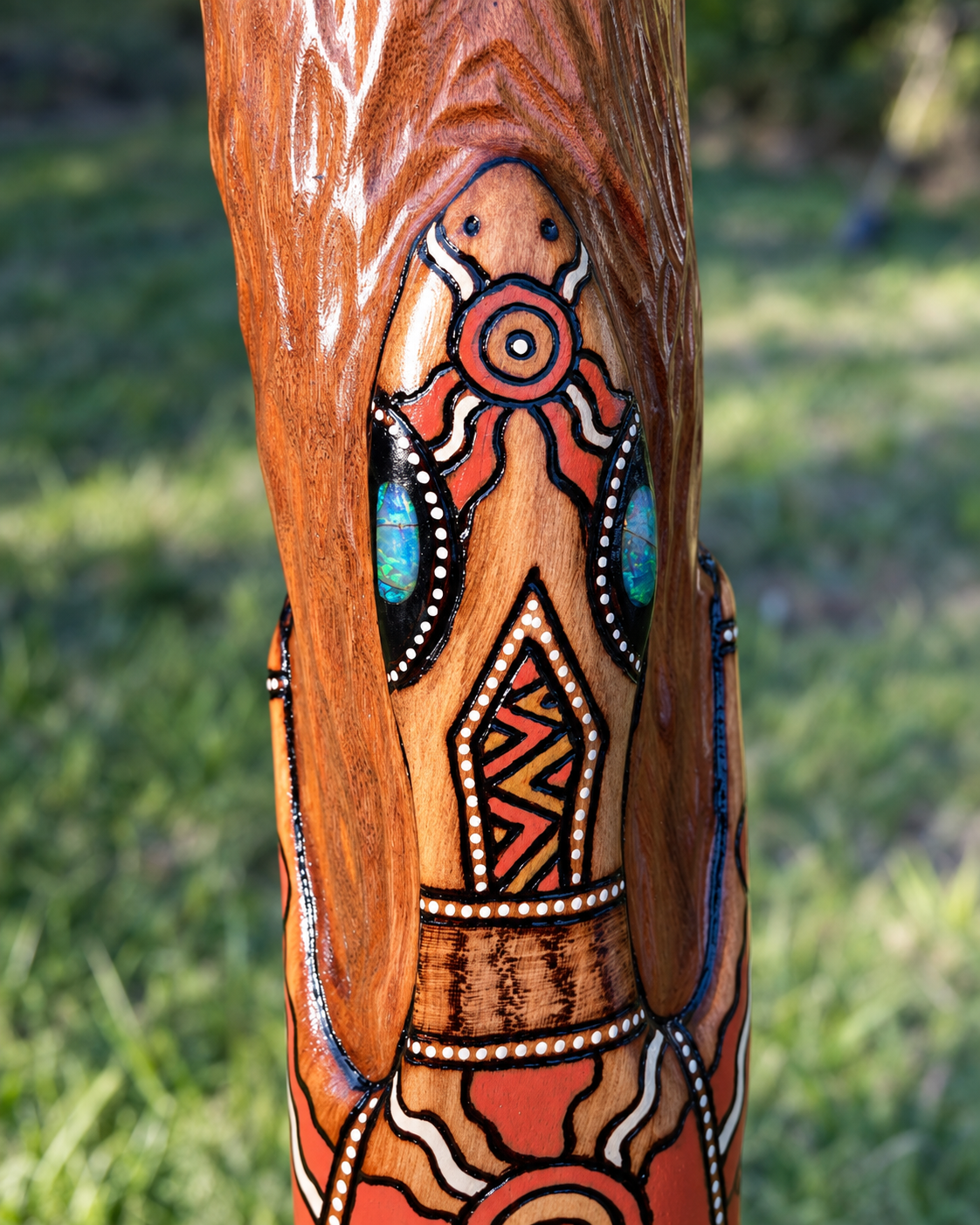
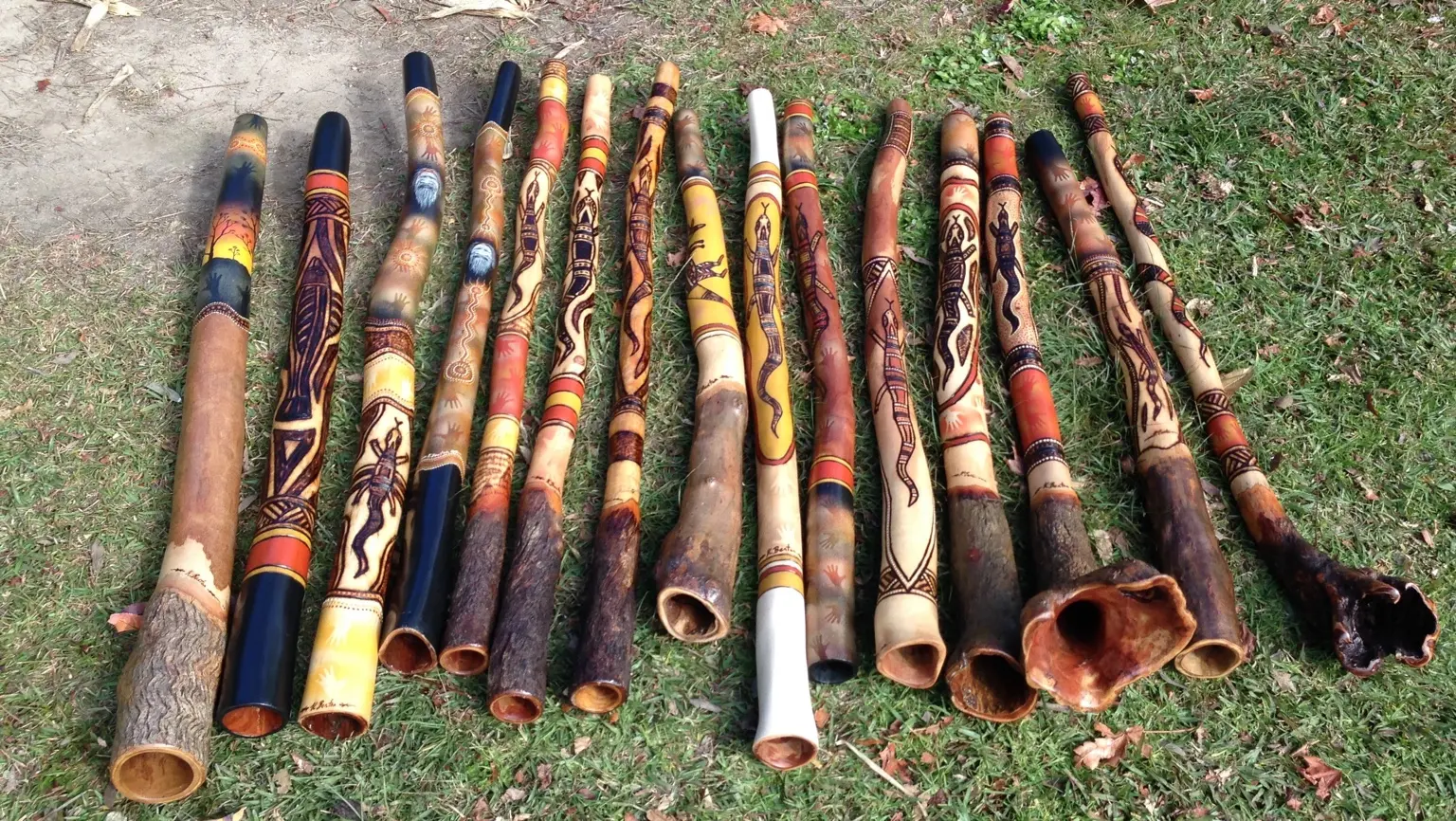
Didgeridoos with a yidaki vibe
Contemporary instruments made around the player: key, backpressure, voice, comfort, timber and character. I also make clapsticks and other timber pieces with the same hands-on process.
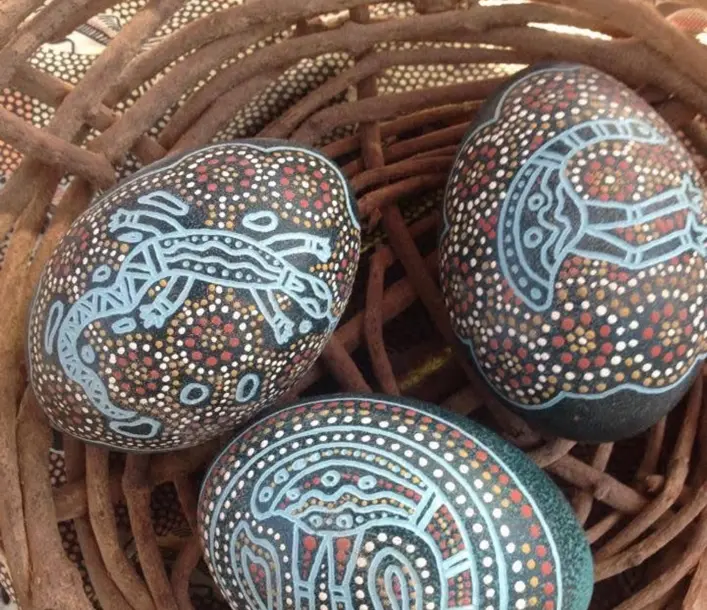
Painted and carved emu eggs, alongside shaped and assembled pieces that sit between art, function and story.
02 · The whole process
From the ground to your hands.
One of the things that makes my work different is that I do the whole process myself. The person who finds the material is the person who finishes the piece.
Stone · Lightning Ridge
I find the opal before I reveal it.
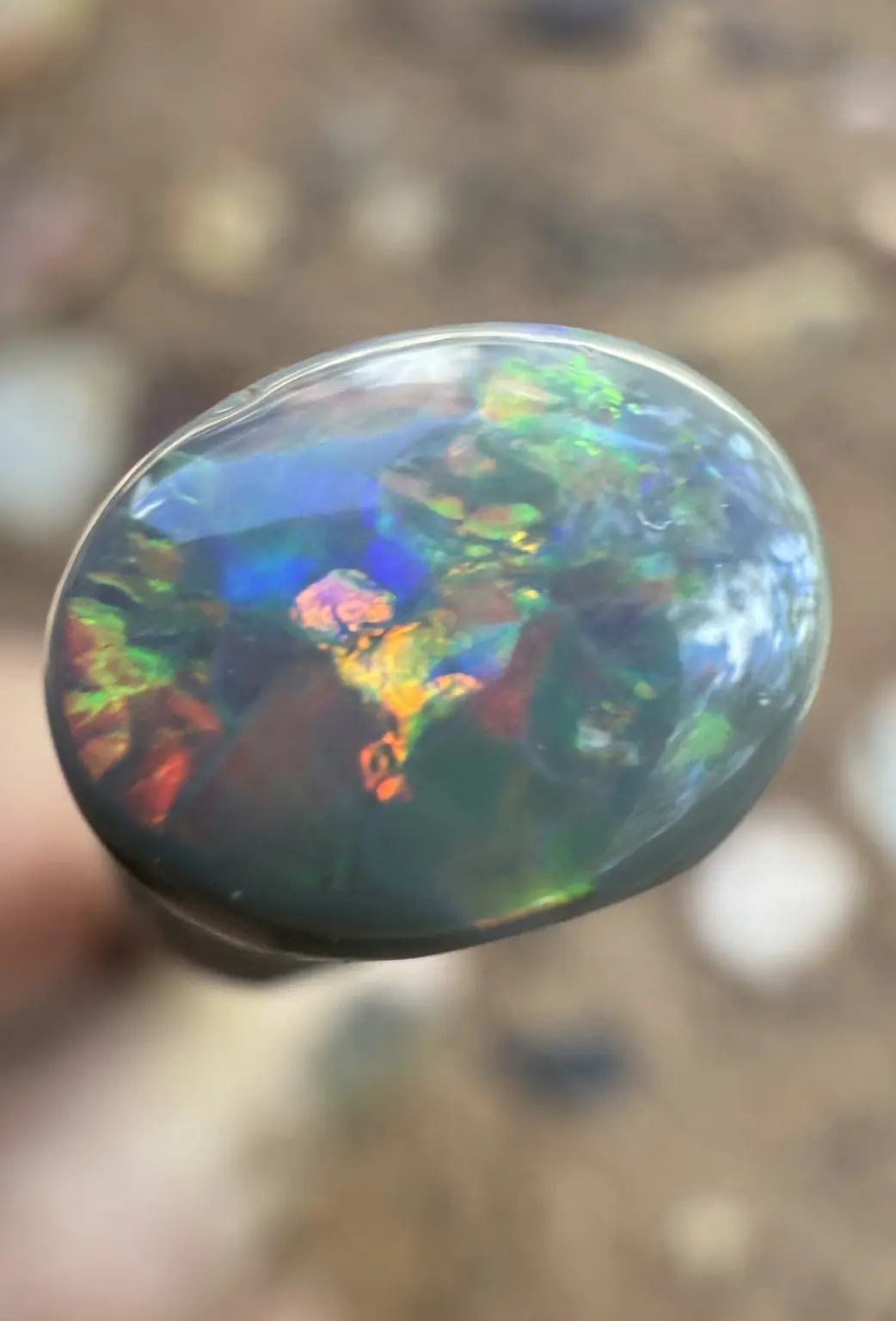
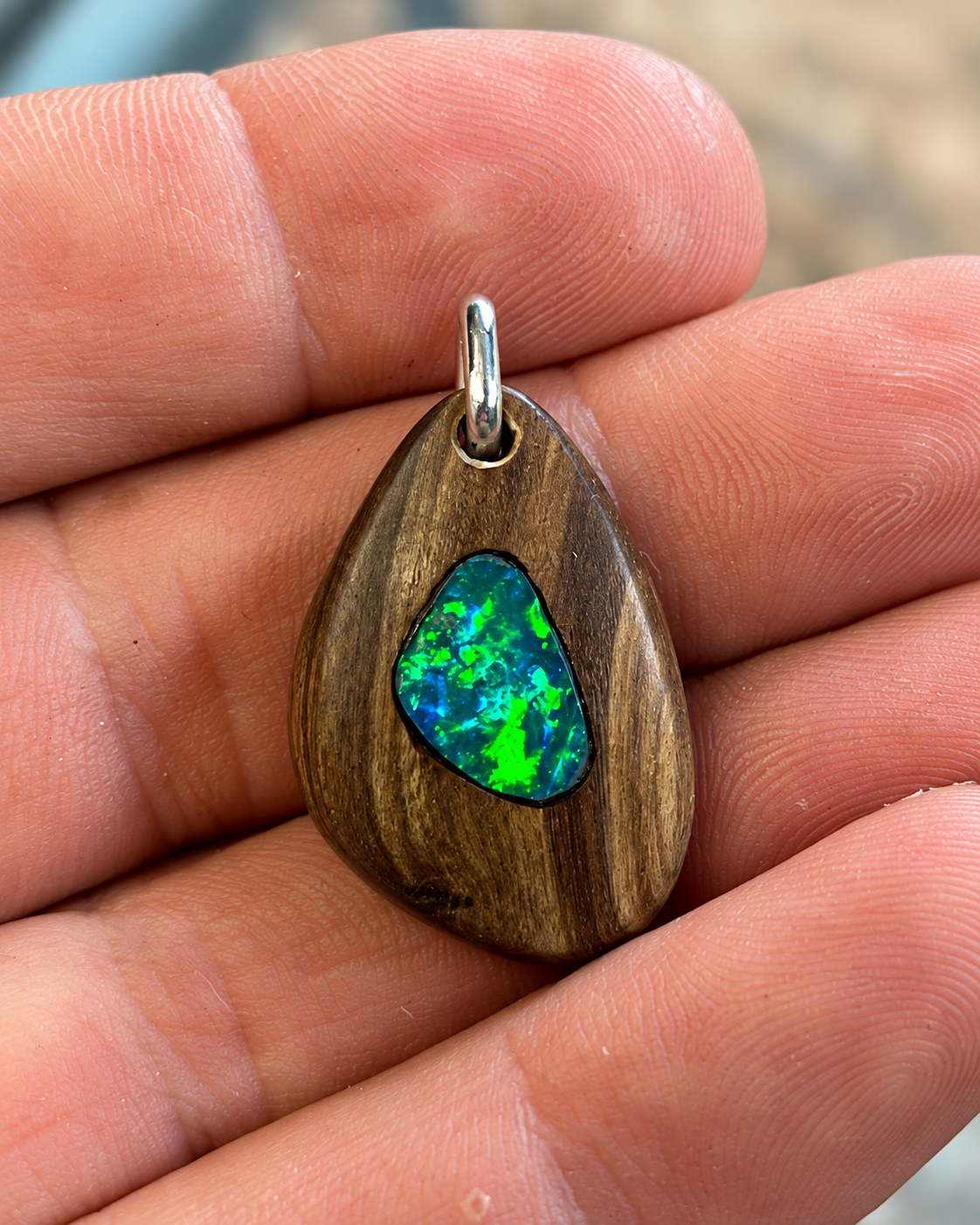
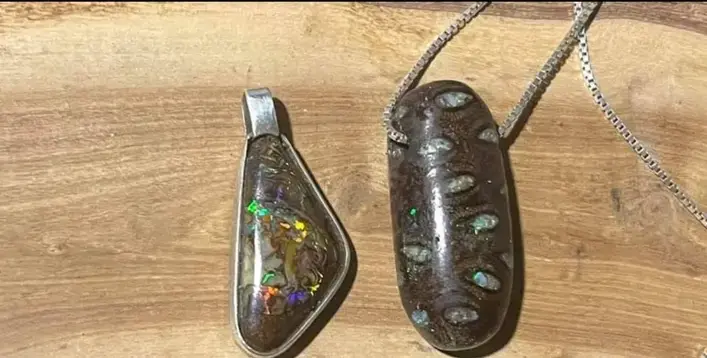
I go mining for the opal. I find it, study it, cut it and polish it myself. Then I may set it into jewellery, carry it into a didgeridoo, or let the stone become the finished piece.
MineFindCutPolishSet
Timber · The bush
I begin with the raw log.
I go out into the bush for the timber. From that raw beginning I shape, tune, carve, paint and finish the didgeridoo or clapsticks. I stay with the material through every stage.
SourceShapeTuneCarveFinish
“People ask how long a didgeridoo took me to make. That can be hard to answer because I might stop, listen and come back to it. But when I look at the instruments I am making now, I believe the truest answer is this: it has taken me thirty years to make one.”
“You don’t impose the answer. You work the material until it reveals what is already there.”
That is the thread through all of my work. A branch has a voice. An opal has a face. A person has a reason for wanting something made.
I listen first, then shape. The job is not to make every piece look the same. The job is to find what makes this piece alive.
03 · Custom work
A conversation, then a creation.
You do not need to know every technical detail. Tell me what you are drawn to, what the piece is for and what matters to you. We can work out the rest together.
Step 01
Tell me the idea
Instrument, stone, jewellery or something harder to name—give me the starting point.
Step 02
We shape the brief
We talk sound, feel, material, size, finish, budget and what you want it to carry.
Step 03
I make the piece
I keep you close enough to the process for the work to stay personal.
Step 04
You meet the result
Final details, sound checks where relevant, delivery and the story of what was made.
04 · Trading Post
Made, found, cut, shaped and carried forward.
Yidakivibes is more than a shop. It is a place to find finished work, begin a personal commission, offer a fair trade or start a conversation where giving matters more than selling.
Ready to go
Available now
Opals, jewellery, instruments and one-off pieces that are finished and looking for the right person.
Open the deposit form, add your name, email and what you would like made, then tick the agreement. Stripe opens securely after those details are complete. This deposit is for an agreed made-to-order piece; workshop, visit, exchange and opal partnership enquiries start below.
I’m opening up ways to share hands-on skills, spend time at my camps and explore practical opal-mining partnerships. Tell me what you have in mind and we can plan a good fit.
Lightning Ridge · around five days
A stay to learn, make & share
Lightning Ridge is a long way to travel, so I’m opening this to individuals for stays of around five days, with a little flexibility either side. We can spend time with didgeridoos and music, opals, practical making, everyday life at camp, and stories and cultural knowledge I’m comfortable sharing—shaped around what we both want to bring.
For visits we agree on, I can cover accommodation at my camp or another camp. We’ll confirm the place, facilities, dates and what we’ll do before you travel.
This starts with a conversation, not a booking. We’ll agree on the exchange together—money, skills, materials, specific help with a camp project, or a mix.
You bring: your interests, ideas and what you’d like to share.
I bring: time, knowledge, making, music and life in Lightning Ridge.
Together: we agree the plan and exchange before you set out.
Learn a skill or work alongside me on a didgeridoo, clapsticks, opal cutting and polishing, or a piece of jewellery. We can shape a one-off session around what you want to make.
For local Aboriginal men who want to learn through didgeridoo, sound and practice, I welcome a conversation about a respectful workshop focused on what I can share.
Come out and learn about opal mining, or talk with me about potential claims, camps and ways to work together. I’m open to meeting a partner or investor; any opportunity needs its own checks and clear terms. No returns are promised.
Bring a skill or idea and we can see whether there’s a camp project worth working on together. Any task, time and exchange will be clear and agreed before we start.
Fire, stone and the knowledge of Country, learned through making and practice.
Language, family & everyday learning
A few words. A shared moment.
You don’t need to know language before you arrive. You’re welcome to listen, ask, and try a little at your own pace. This is a growing collection for family, friends and visitors, not a test or a condition of coming to camp.
For Ella, Arden, Djalu and Thuni — learning on Country with Kristian.
Learning Through My Hands — Fire, Stone and the Knowledge of Country
I’ve spent much of my life learning how to make things with my hands. From didgeridoos and opal jewellery to shaping stone and making fire, these skills have taught me far more than how to create something. They’ve changed how I see Country, how I understand the materials around me, and how I find stillness within myself.
This is part of my journey of learning, practising and keeping knowledge alive.
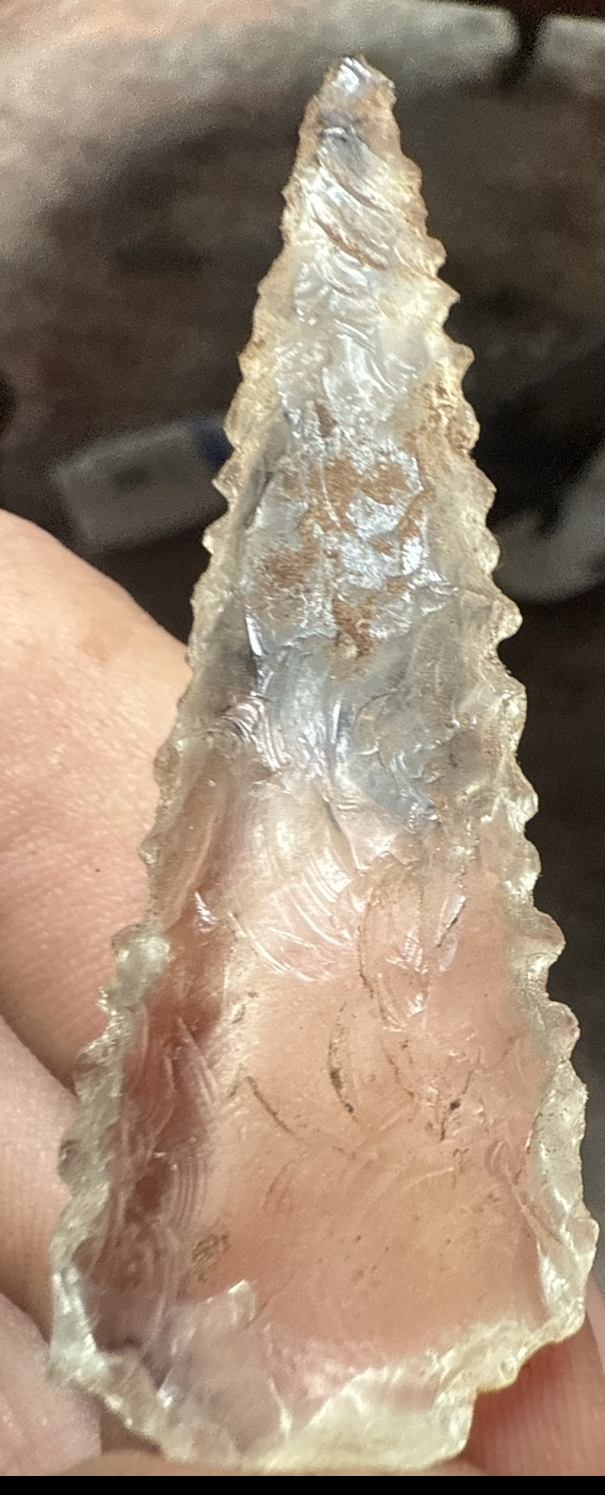
A close look at the flaked edge and shape of a point I made by hand.
Learning Through My Hands
Fire, Stone and the Knowledge of Country
I’ve spent much of my life learning how to make things with my hands.
Didgeridoos from raw timber, jewellery from opal I’ve mined and cut myself, spears, clapsticks and cultural objects shaped from the materials around me.
But some of the most powerful things I’ve learned have come from the simplest of materials.
A stone. A piece of glass. Two pieces of timber. The plants growing around me.
Learning to Shape Stone
Quite some years ago, I began teaching myself the ancient skill of knapping — shaping stone and glass into sharp points and cutting edges.
Around five or six years ago, perhaps longer, I started taking it more seriously.
I learned through trial and error, breaking plenty of pieces along the way. Gradually, I began to understand how stone and glass fracture, how to control a flake, how to shape an edge and how to bring a point together.
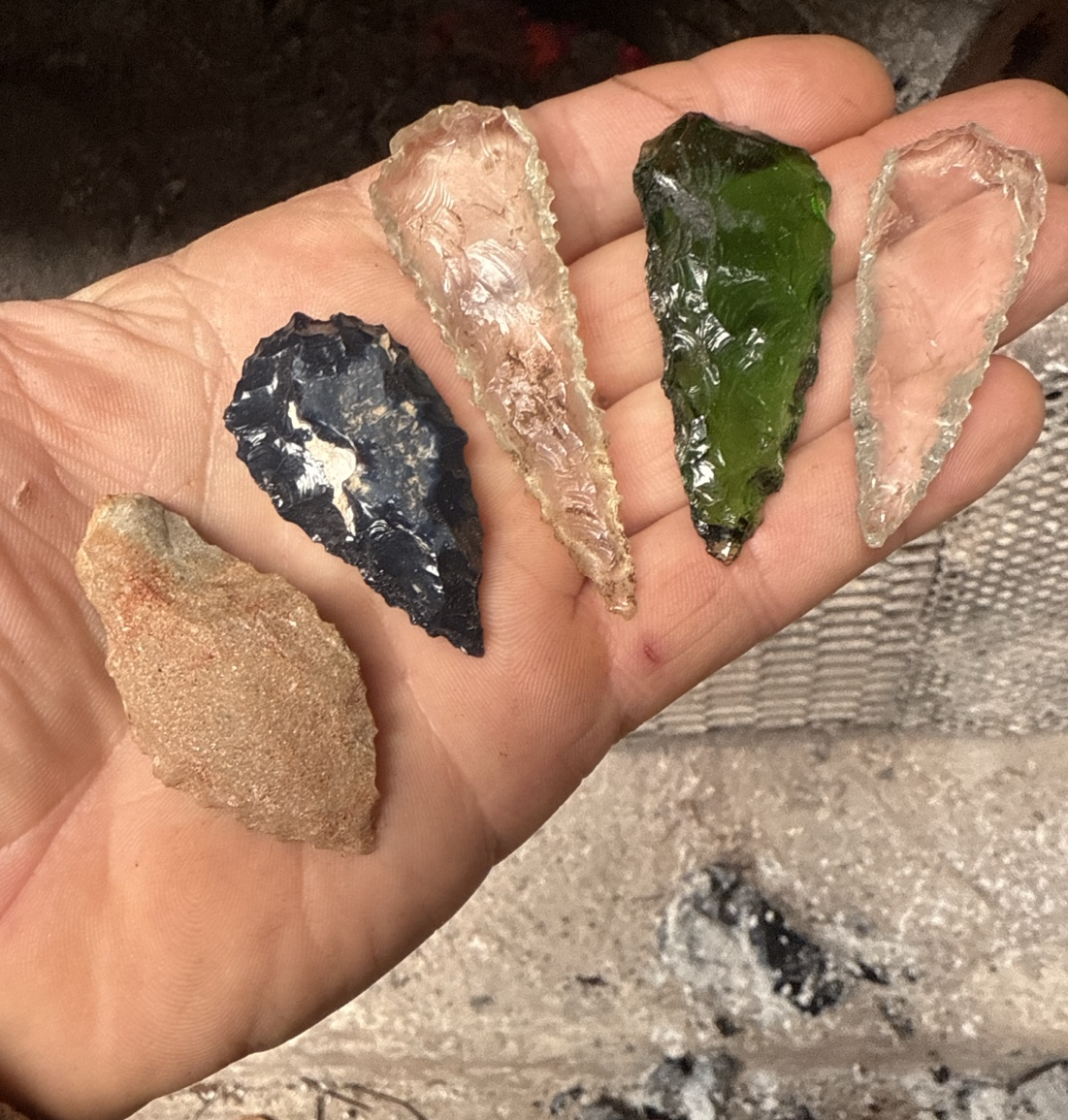
The pieces pictured here are some of my own creations.
Some of the pieces I’ve shaped, held in my hand so you can see their size and different flaked edges.
There’s something deeply satisfying about taking an ordinary piece of material and, through knowledge, patience and your own hands, transforming it into a useful tool.
But knapping has become something else for me.
Sometimes, when I’m at my most unsettled, I find myself picking up a piece of stone or glass and beginning to work.
My thoughts don’t stop, but they slow down. My attention becomes absorbed in what I’m doing, and somewhere along the way, I find a sense of relief.
I experience something similar through my artwork, guitar playing, didgeridoo making and working with opal. It’s all connected. But knapping is perhaps the most powerful of them all for bringing me into the moment.
Making Fire With My Own Hands
Another skill I eventually taught myself, with guidance from other fire makers, was making fire through friction using natural materials.
I’ve achieved it several times now, using materials I’ve gathered and prepared myself.
I’ve also shared that experience with my brother Rick, which was something truly beautiful.
It’s difficult to explain the feeling.
You begin with two pieces of timber. Your hands, your effort, your understanding of the materials.
Then a little dust. A little smoke. A tiny glowing ember.
And eventually, fire.
Fire that you made yourself. Fire that can warm you. Fire that can cook your food. Fire that can sustain life.
There’s an extraordinary power in something so simple.
And it’s not just about achieving fire. It’s what you learn along the way.
You begin to understand timber differently. Its hardness, dryness, fibres and properties. Which materials work together and which don’t.
And every time you succeed, your relationship with those materials becomes a little deeper.
Learning to See Country Differently
I’ve spent years walking through the bush, searching for timber to make didgeridoos, spears and clapsticks, learning from people who have generously shared their knowledge with me.
And somewhere along the way, something changed.
I began to see things differently.
When I look at a tree now, I don’t just see a tree.
I see its shape, its grain, its strength. I think about what it might become, what it might be useful for and what it can teach me.
I know I look at trees differently from many people, because I was taught to look at them differently.
And the same thing has happened with stone.
Where I might once have seen an ordinary rock, I now find myself examining its properties. How it fractures. Its hardness. Its texture. What it might be capable of becoming.
The more I’ve learned, the more the bush has opened up to me.
Plants, timber, stone, fire, food, medicine. They’re not separate subjects anymore. They’re all connected.
You learn something from an Elder. Something from a friend. Something from your own observations. Something from a mistake.
You return to Country, try again, and begin to understand a little more.
The more I learn about Country, the more I realise how much there is still to learn.
Keeping the Knowledge Alive
I’ve come to believe something quite strongly.
Culture can’t simply be taught. It must be practised.
Of course, knowledge can be shared. People can show us things, explain things and guide us. I’ve been fortunate to learn from some extraordinary people.
But unless we take that knowledge into our own hands, practise it and develop our own understanding, something is missing.
Knowledge becomes deeper through experience.
And through that experience, it continues to grow and evolve.
I don’t believe we need to live exactly as our ancestors lived to appreciate the knowledge they carried.
But I do believe there’s something incredibly valuable about learning these skills with our own hands.
Not just reading about them. Not just watching somebody else demonstrate them.
Actually doing them.
Feeling the stone fracture. Watching the ember form. Recognising a useful plant. Understanding the timber.
And then sharing what we’ve learned with somebody else.
Sometimes it’s two brothers sitting together, working with a couple of pieces of timber, until suddenly there’s a glowing ember between them.
And in that little ember is something much bigger than the fire itself.
Knowledge. Connection. Survival. Country.
Culture isn’t something we only look back on. It’s something we live, practise and carry forward.
I’m still learning. And I hope I never stop.
Sometimes the most powerful thing we create isn’t the object in our hands. It’s the stillness we find while making it.
From mining and finding to cutting, polishing and setting: Kristian’s work follows the material through the whole process. His existing approach is to build around a stone’s natural form, rather than force it into a standard design.
This is the beginning of the learning notes, not an opal-cutting tutorial. Practical lessons and Kristian’s own remembered advice will be added in his words.
Fibre craft / learning in progress
Collecting. Trying. Learning.
Kristian is collecting different fibres and developing his own practice. This section will follow that learning: the materials, the attempts, and what each experiment teaches.
A place for future fibre notes and photographs. Plant identification, gathering permissions and preparation guidance need checking before a how-to lesson is shared.
Didgeridoo & guitar / sound and attention
More than the finished instrument.
In his story above, Kristian connects guitar playing, didgeridoo making, opal work and knapping through the attention he brings to the work. For his handmade instruments, sound, response and the individual player are central.
Dedicated playing lessons and Kristian’s teaching philosophies are still to come. Advice remembered from teachers will only be shared with appropriate credit and permission.
A first look into the Yidakivibes archive: finished pieces, close details and materials that revealed what they wanted to become.
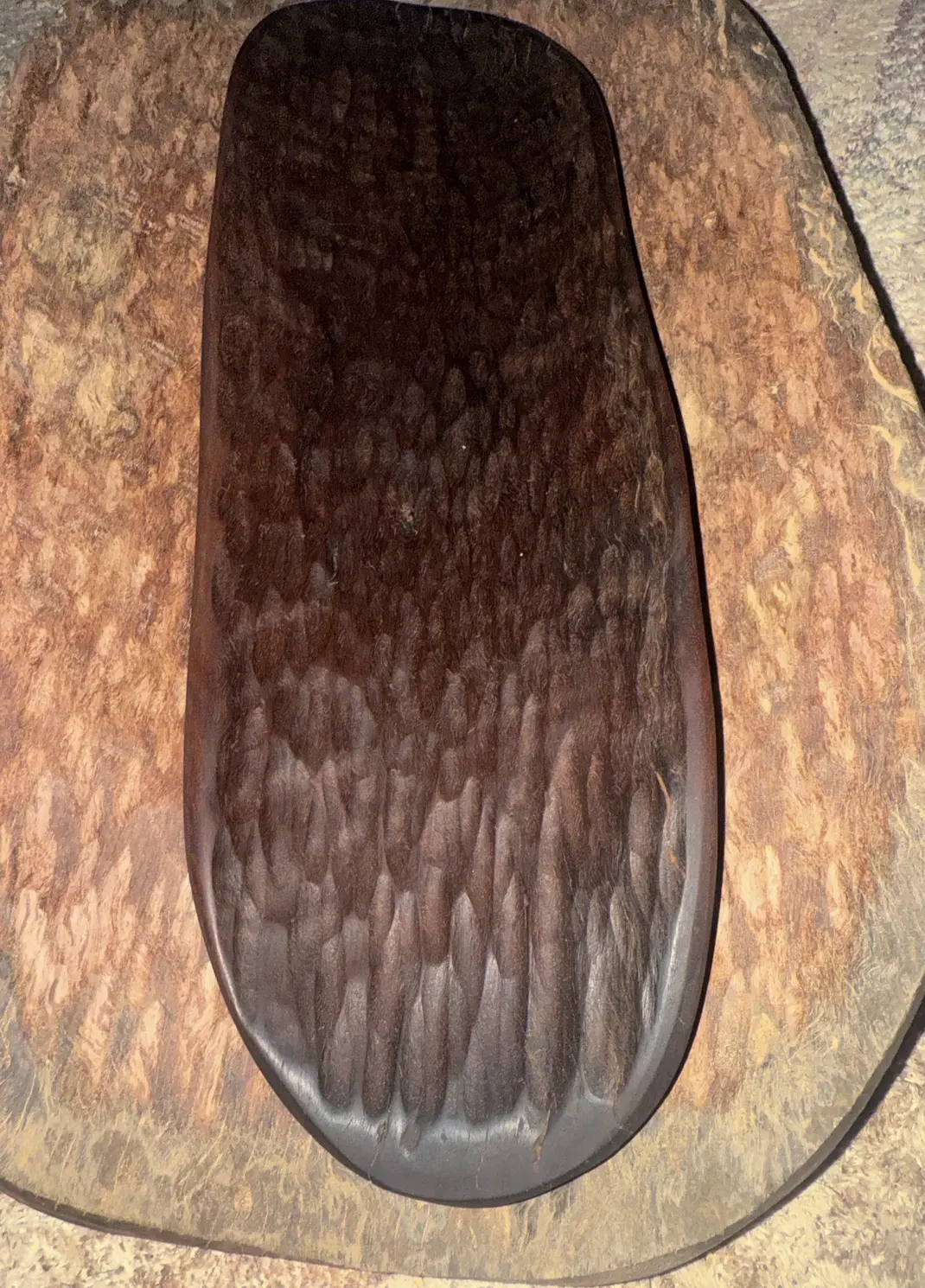
Recovered Goolabah · Made to be used
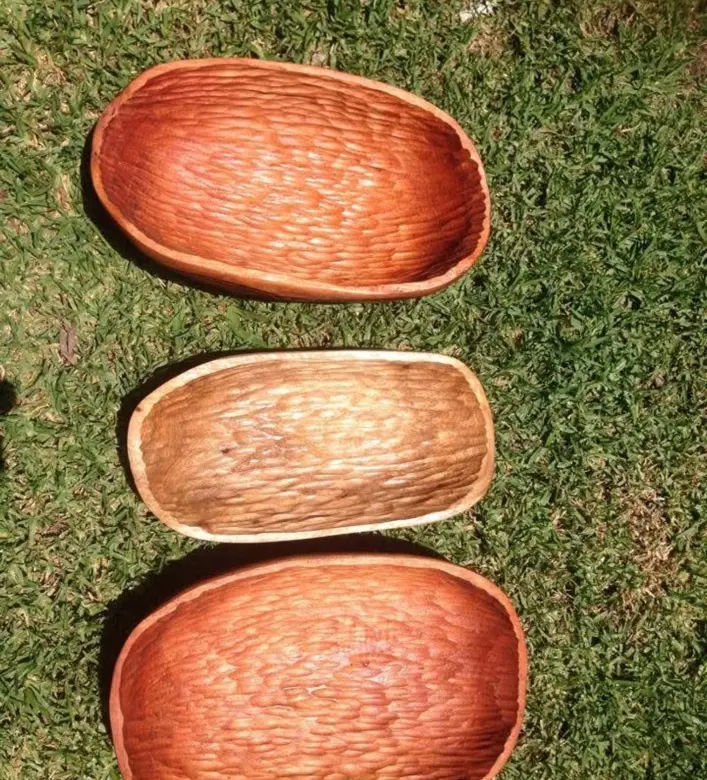
Coolamons shaped from what Country gives
For more than twenty years, I’ve been making coolamons and gradually refining the way I work. Most begin with timber I salvage—Goolabah that might otherwise be burnt, or left in piles after farmers have pushed it up during clearing and fence-line work.
I work with the natural hollow, grain, scars and fire marks already in the timber. I try to use what I find in the most sustainable way I can, shaping each piece slowly rather than forcing every one into the same form.
These are not only display pieces. I’ve made coolamons for Elders to hold leaves during smoking ceremonies. Others are used as fruit bowls and everyday vessels, while some are kept for traditional use. They are made to be strong, useful and lived with.
This coolamon has sold. I’ve kept it here as an example of my work with Goolabah.
A body of workA gathering of instruments from the Yidakivibes archive.
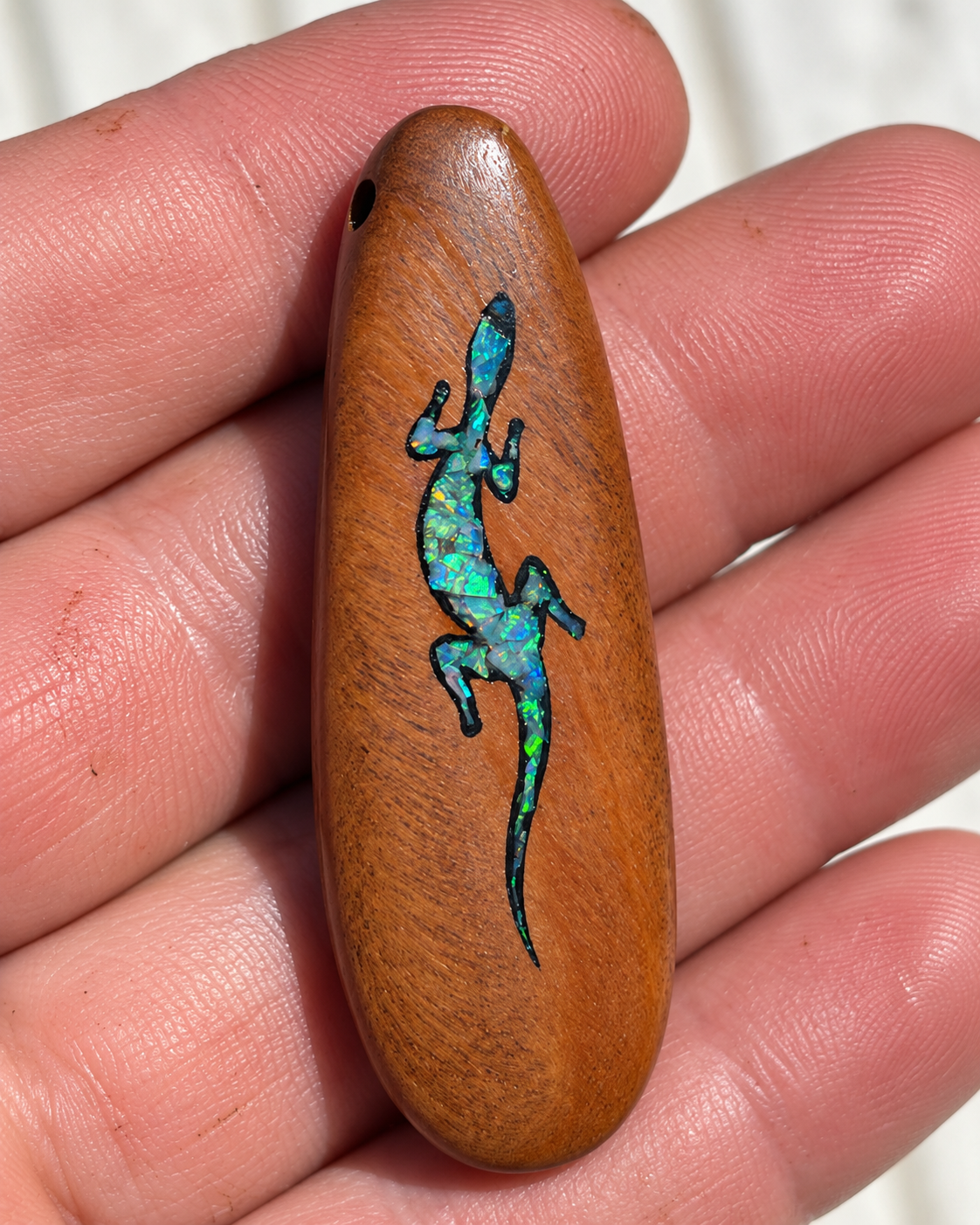
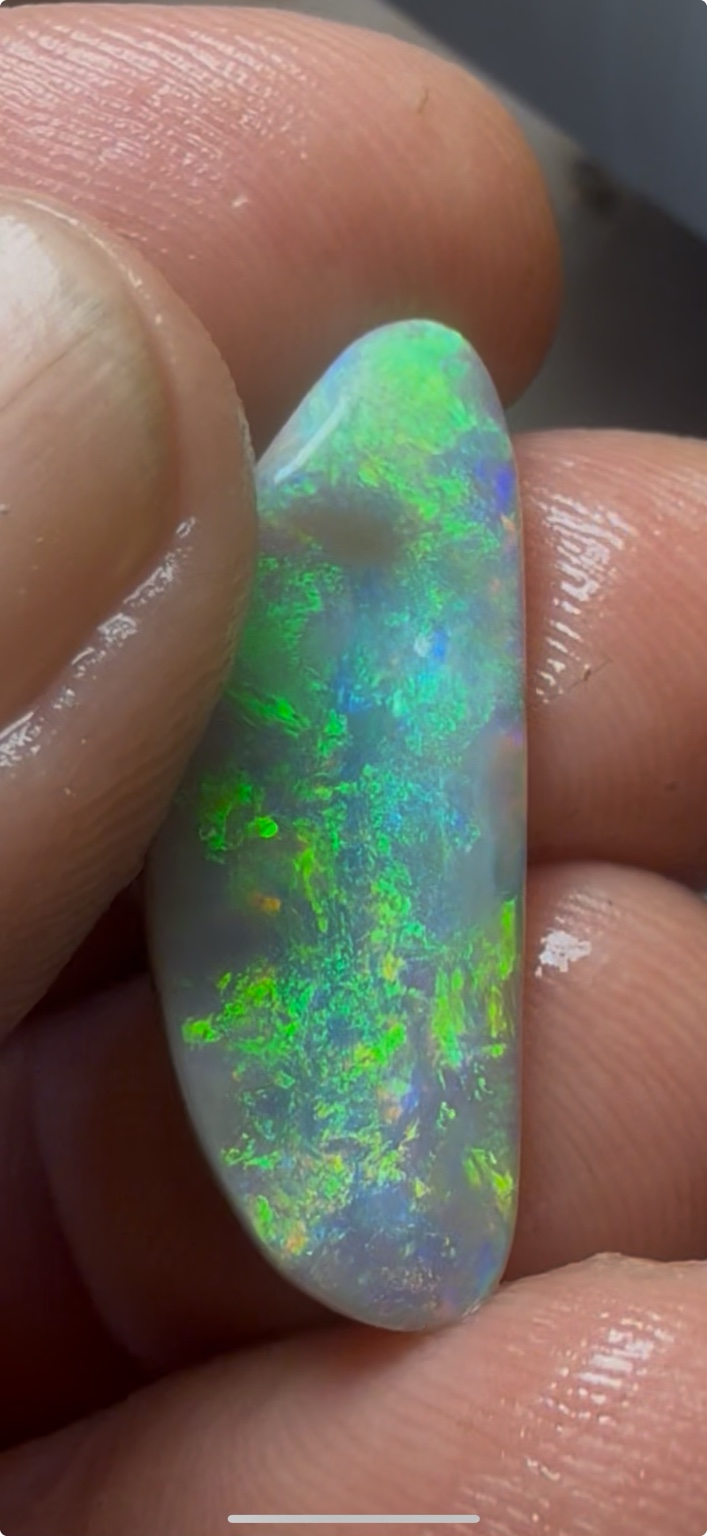
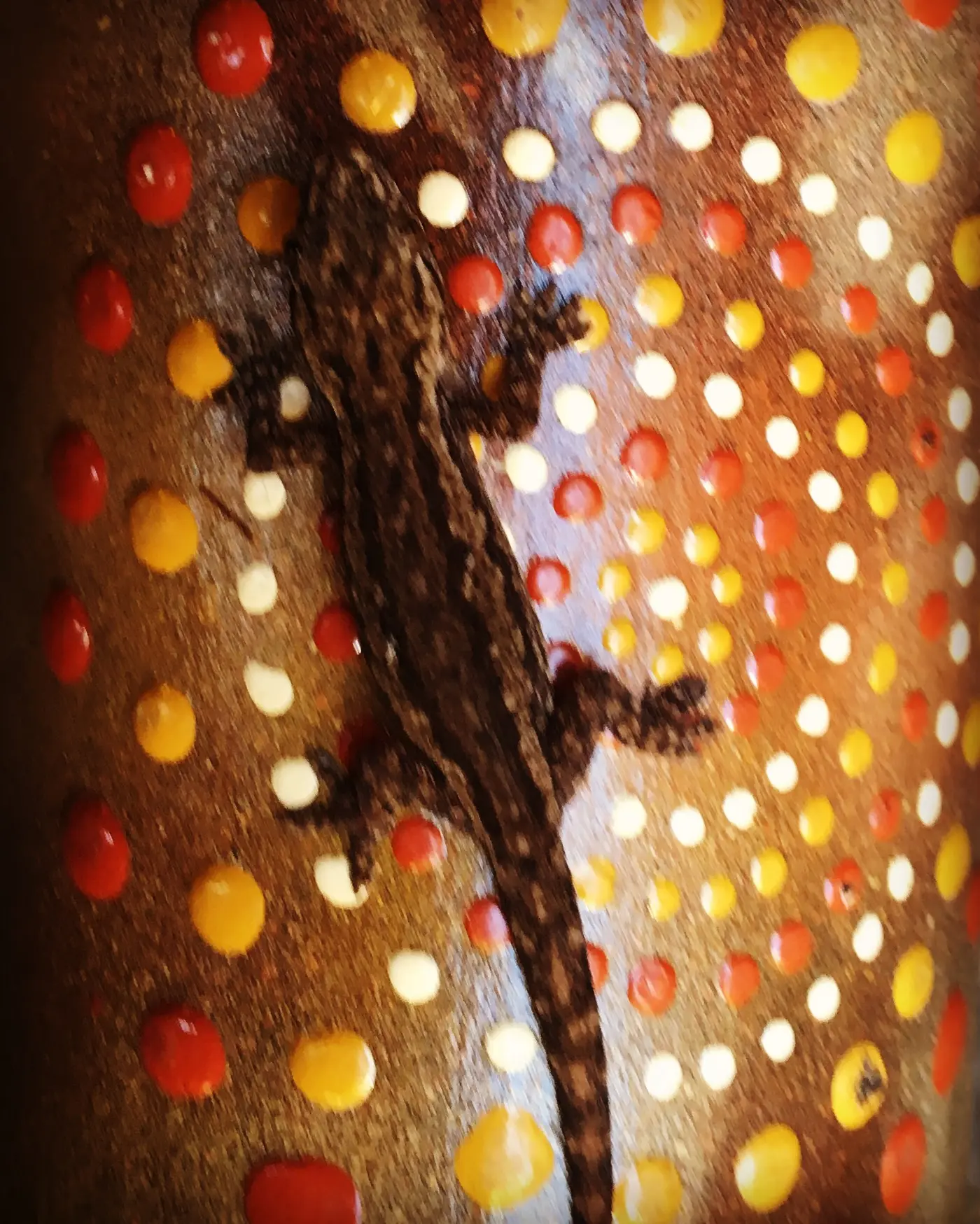
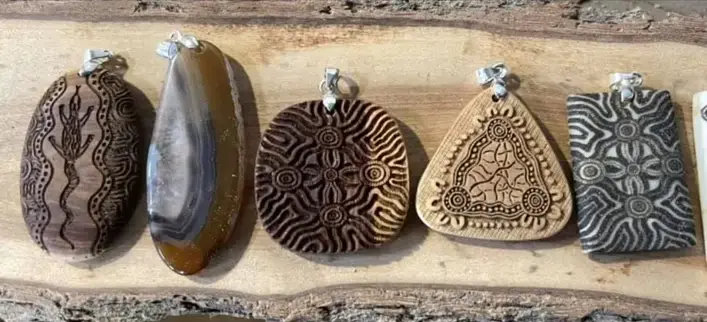
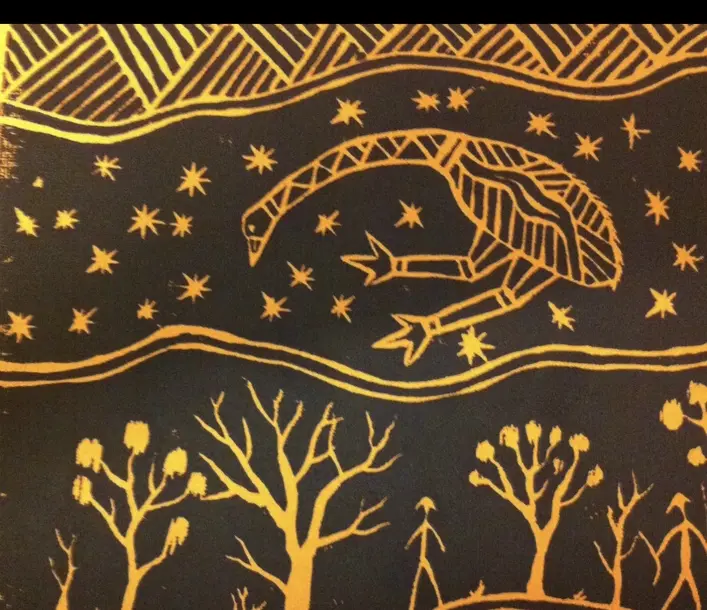
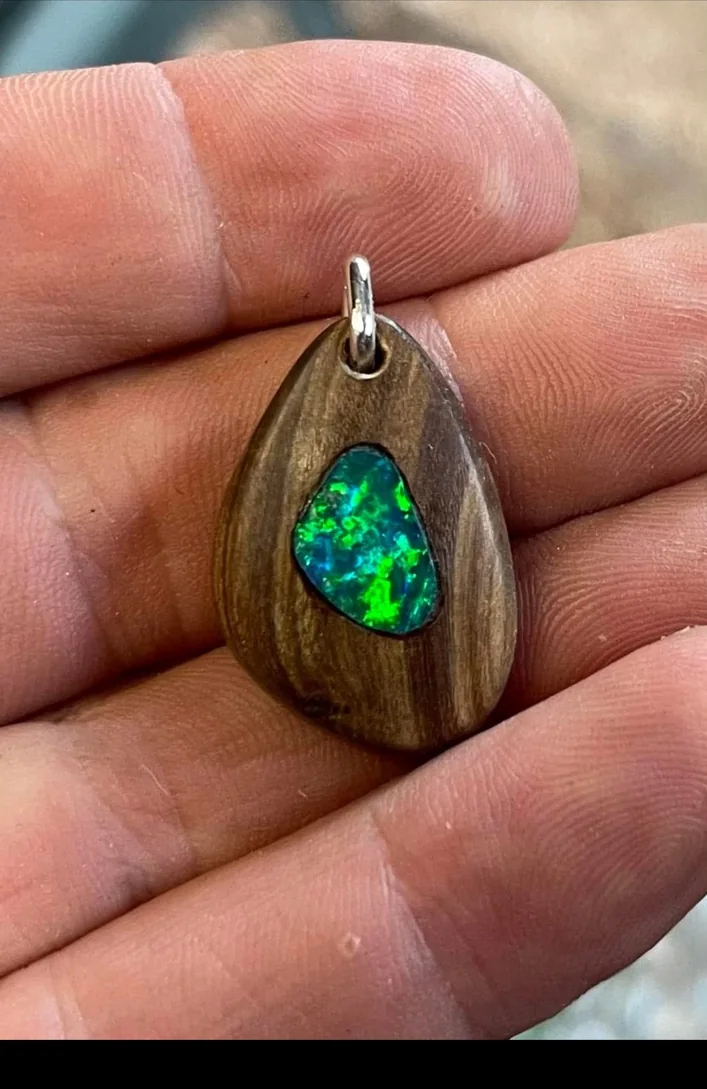
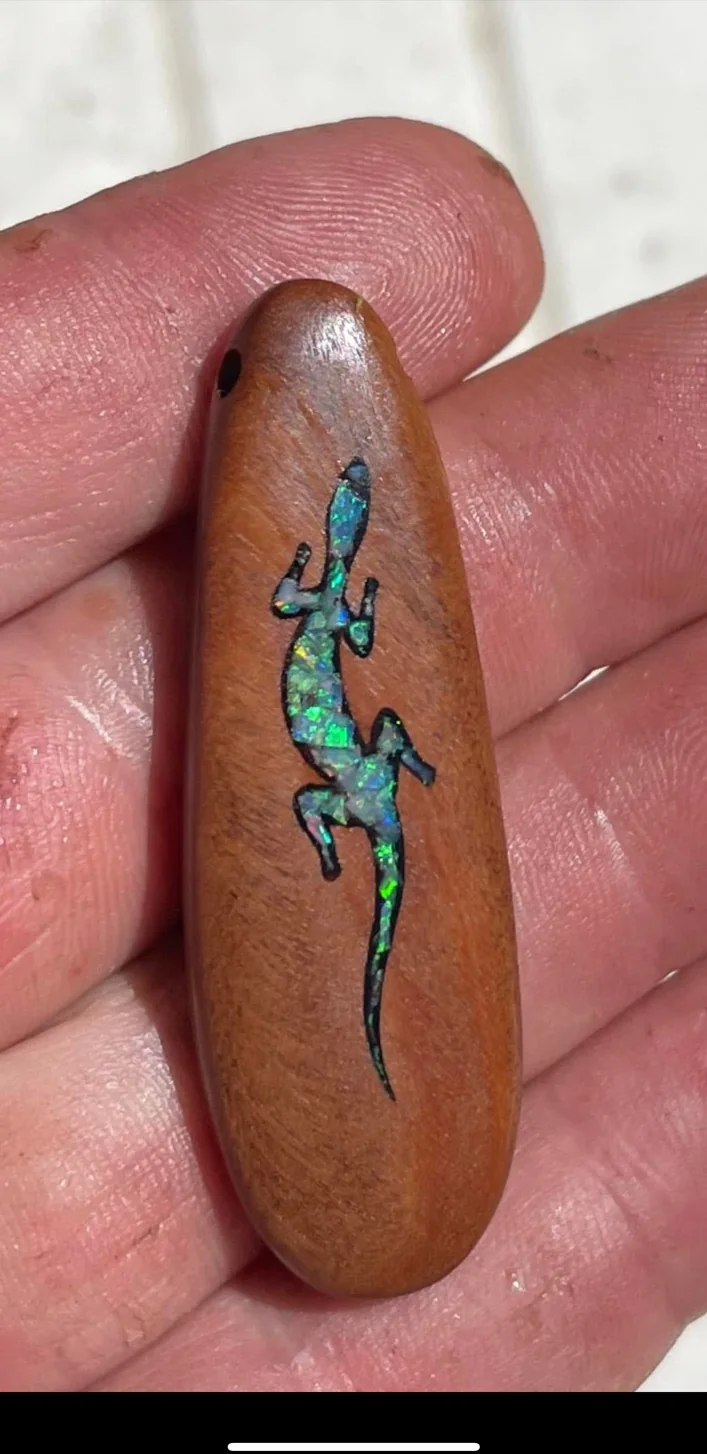
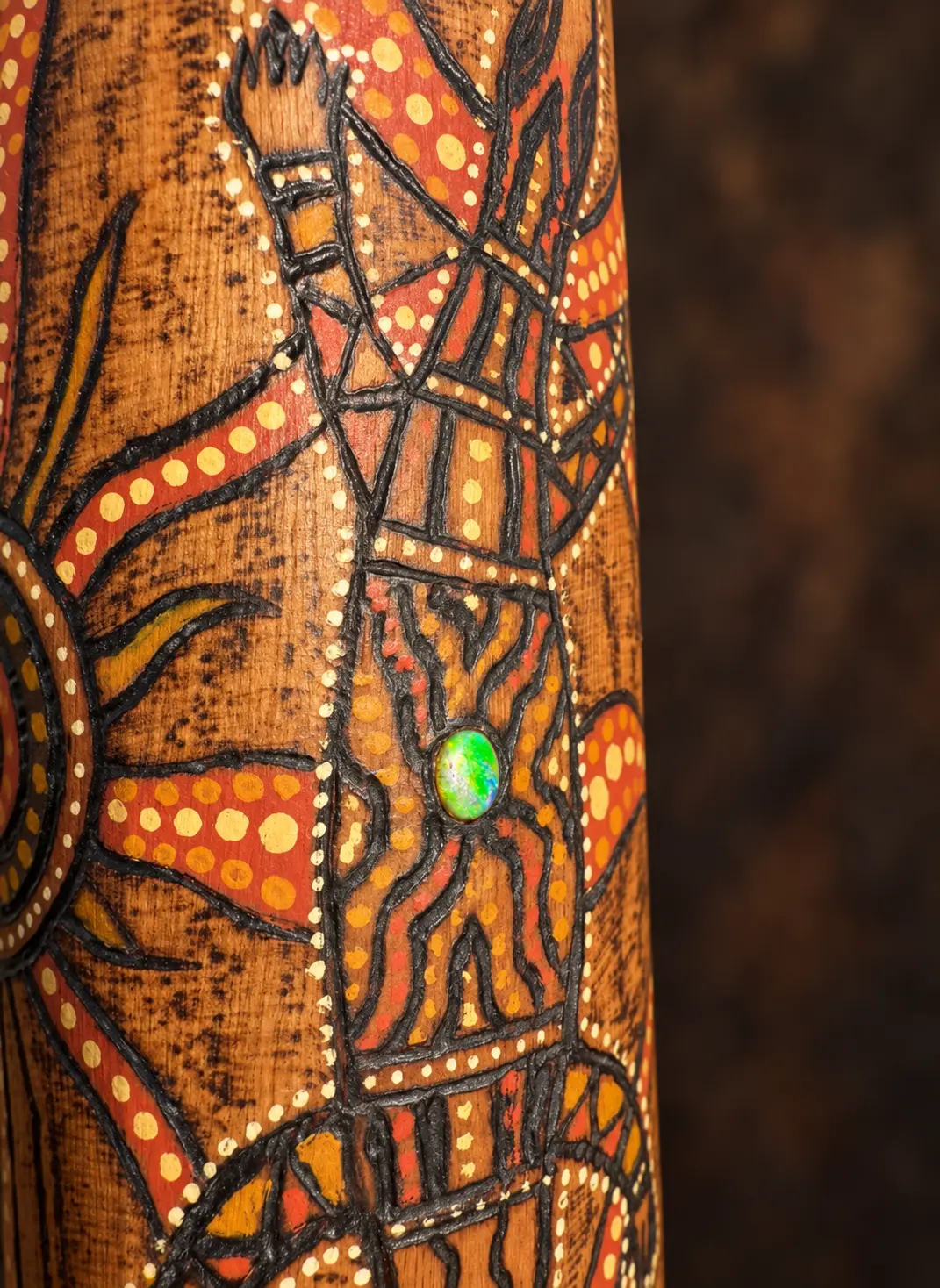
Carved, painted and set with opalTimber, sound, pattern and Lightning Ridge colour brought into one piece.Colour from the RidgeA close look at one of Kristian’s opals.Opal held in timberA one-off pendant shaped around the stone.Opal goanna, carried closeA small one-off piece where timber and Lightning Ridge colour meet.Painted timberThe hand remains visible in every mark.Two stones, two directionsEach setting follows the material rather than a standard mould.Painted and carved emu eggsEach egg carries its own pattern, character and story.A family of one-off piecesDifferent timbers, forms and marks—no two beginning in the same place.Useful objects, shaped slowlyCarved timber made to be held and lived with.Goolabah coolamonA finished piece, carved and shaped by hand, resting on a larger coolamon still taking form.Story across a surfaceLine, pattern and Country carried into painted work.Timber, shaped around opalA recent Yidakivibes making photoSmall details, made by handA recent close-up of timber and opal work
07 · The maker
Kristian Benton
I am an Aboriginal man and a cultural man, living and working at Lightning Ridge on Yuwaalaraay Country. I honour every line of ancestry that makes me who I am. I am not half of anything. I am all of it.
For more than thirty years I have practised culture and learned through relationships with Elders, family, mentors and remarkable cultural people who welcomed me, taught me and trusted me with access to knowledge and experience. I carry that trust with respect and responsibility, and I share only what is mine to share.
I am a musician, maker, Aboriginal artist, opal cutter and fossicker. My education has happened through people, Country, stages, sheds, camps, timber, stone and thousands of hours with instruments in my hands.
Over more than three decades, this work has taken me from schools, correctional centres, community programs and gatherings across Australia to performances and cultural events overseas. I spent a decade travelling with the Department of Foreign Affairs and sharing culture through performance. I have shared sound and story in South Korea, Vietnam, China, South Africa, Mongolia, Abu Dhabi and Dubai. The places have been different, but the heart of the work has stayed the same: meeting people through music, making and honest human connection.
Yidakivibes began from my life with sound. It now holds the wider body of work: instruments made to be played, opals uncovered and understood, jewellery built around natural form, and one-off objects made because the idea would not leave me alone.
The name comes from the kind of instrument I have always tried to make. They are contemporary didgeridoos, but the sound, response and spirit I pursue carry what I have always felt as a yidaki vibe.
I am not interested in making empty objects. I want a piece to have character, purpose and a human connection behind it.
Sticks with Spirit.
Yidaki belongs to Yolŋu language and culture in northeast Arnhem Land. I do not claim that my instruments are Yolŋu yidaki. They are my own contemporary didgeridoos, made with respect for the instrument, its origins and the people whose knowledge has guided generations of players.
08 · A gift from my hands
Support this work. Receive a gift from my hands.
Every supporter contribution of A$20 or more comes with a thank-you gift: a genuine Lightning Ridge opal, a handmade piece or “Surprise Me.” I have plenty of opal and I love sharing it. The exact gift depends on what I have available; a larger contribution gives me more room to choose something special.
Postage for a small gift within Australia is included. If you’re overseas, please get in touch first so we can work out the postage.
Tell me what you’d like made, what caught your eye, or what you’d like to learn on Country. If you’re thinking about a stay, a work exchange or an opal partnership, tell me a bit about that too. I’ll reply personally.
 Try the Fossicker app